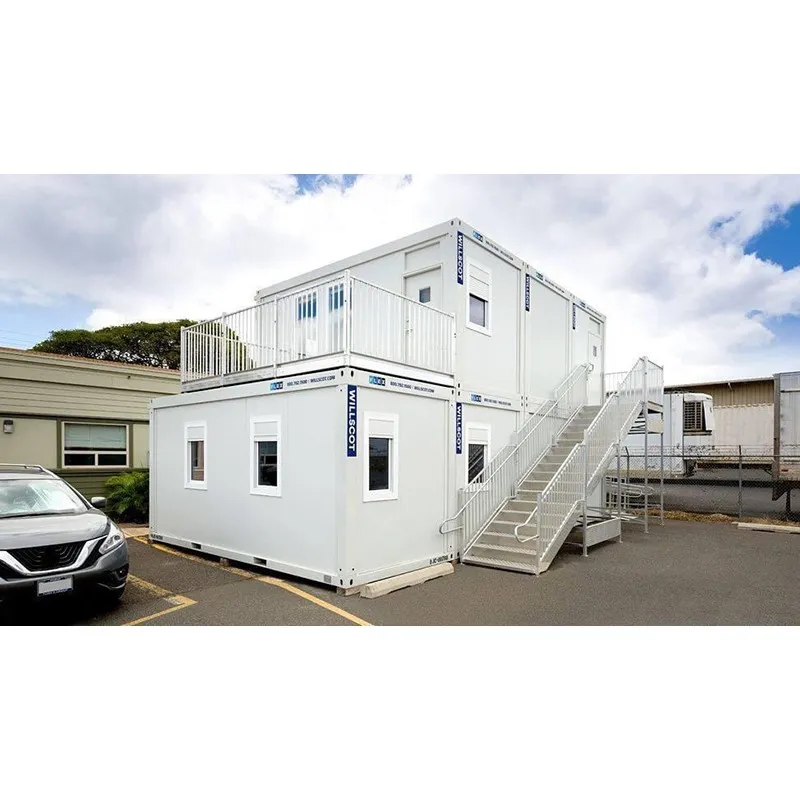
Capsule houses, as an emerging micro-living form, have garnered widespread attention worldwide in recent years. Their core concept is to provide urban residents with a low-cost, highly flexible living solution through efficient space utilization and modular design. This architectural form not only addresses the increasingly severe housing shortages associated with urbanization but also reflects modern people's pursuit of a minimalist lifestyle.
Spatial Efficiency and Functional Integration
The most significant feature of capsule houses is their extreme spatial compression. Typically, a standard capsule unit measures between 2 and 5 square meters, but through clever design, it can integrate sleeping, storage, work, and even leisure functions. For example, foldable furniture, wall-mounted storage systems, and multifunctional beds enable limited space to meet basic living needs. Furthermore, capsule houses often utilize a vertical layout, further enhancing space efficiency through multi-level or modular designs.
This efficient space utilization is not only suitable for individual living but also for shared accommodation, temporary offices, or emergency shelters. In Japan, capsule hotels have been a well-established business model since the 1970s, providing affordable accommodation options for business travelers and tourists on a budget. In Europe, designers are prioritizing the sustainability and aesthetic value of capsule homes, integrating them into urban public spaces or community planning.
Modularity and Sustainability
Another major advantage of capsule homes is their modular nature. Each unit can stand alone or be connected to form larger living complexes. This flexibility allows capsule homes to adapt to diverse terrain and environmental conditions, whether on small plots in city centers or temporary settlements in remote areas. Furthermore, the modular design simplifies the construction process, shortens the construction period, and reduces transportation costs.
In terms of sustainability, capsule homes often utilize lightweight, environmentally friendly materials such as recycled metal, bamboo fiberboard, and energy-saving insulation. Some designs also incorporate solar panels, rainwater collection systems, and smart energy management technologies to reduce reliance on traditional energy sources. This low carbon footprint makes them a potential solution to global climate change and resource constraints.
Social and Cultural Significance
The rise of capsule homes is not only an architectural innovation but also reflects a rethinking of living patterns in contemporary society. In large cities, where housing prices are high, they provide a viable housing option for young people, freelancers, and transitioning residents. At the same time, their compact design has prompted reflection on consumerist culture and encouraged a "less is more" lifestyle.
However, capsule homes also face challenges, such as privacy, ventilation and lighting issues, and regulatory restrictions in some regions. Future developments may include more intelligent internal environmental control, optimized user-friendly design, and deep integration with smart city infrastructure.
Conclusion
Capsule homes represent a cutting-edge exploration of micro-living space design. Their value lies not only in their innovative physical form but also in their sensitive response to social needs. With technological advancements and shifting perspectives, capsule homes are expected to play an even more important role in future urban development, offering new possibilities for the sustainability and diversity of human living environments.