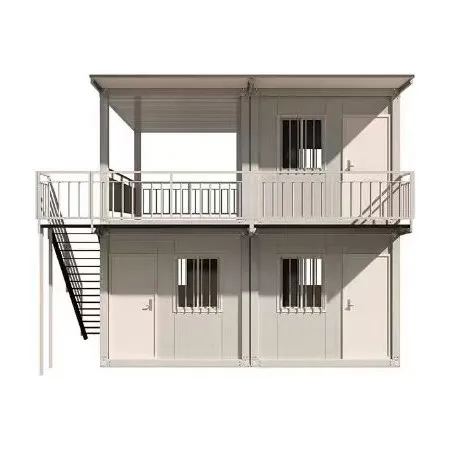
As an emerging architectural form, container housing has evolved through the integration of industrial standardized design, modular construction techniques, and sustainable development concepts. From its initial origins as a means of transportation to its transformation into a modern living space, the emergence of container housing stems from both practical needs and the drive for technological innovation and environmental awareness.
The Foundation for the Reuse of Industrial Heritage
The material foundation of container housing stems from the standard shipping containers widely used in global trade. In the mid-20th century, the International Organization for Standardization (ISO) established unified specifications for 20-foot and 40-foot containers. These steel containers, with their sturdy structure and universal dimensions, became efficient carriers for cargo transportation. However, with the transformation of the shipping industry, a large number of retired containers have been left idle due to high transshipment costs, creating a potential building resource. Architects and designers have tapped into the surplus value of this industrial byproduct, giving it a second life through structural reinforcement, insulation, and functional renovation.
The Support of Modular Construction Technology
The development of container housing relies on the maturity of modular construction technology. Each standard container is a self-contained functional unit, equipped with a prefabricated load-bearing frame, waterproof floor, and operable door and window interfaces. Through welding, bolting, or nesting, construction engineers have expanded single containers into multi-layer structures or clustered layouts. Modern technology has further enabled pre-buried internal piping, integrated insulation, and embedded installation of renewable energy equipment like solar panels. This allows over 70% of container home construction to be completed during the factory prefabrication phase, significantly reducing on-site work complexity.
Design Innovation and Functional Adaptation
The ultimate form of a container home is inseparable from the creative transformation of architectural design. Designers have cut into the side walls to create open spaces, utilized sloping roofs to improve lighting and ventilation, and combined different containers to create complex functional areas (such as separate bedrooms, kitchens, and bathrooms). Some projects utilize "Lego-like" modular assembly techniques for rapid assembly and disassembly; others incorporate exterior decoration, green walls, or graffiti to mitigate the cold, industrial appearance of the container and enhance its aesthetic value. This design flexibility allows container homes to adapt to emergency needs such as temporary relocation after disasters and housing shortages in remote areas, as well as serve as distinctive commercial spaces such as art galleries and cafes.
Driven by Sustainable Development
Environmental awareness is a core driving force behind the promotion of container homes. Compared to traditional concrete construction, container-based renovations reduce building material consumption and carbon emissions by approximately 30%, and their steel core is 100% recyclable. In urban environments where land resources are scarce, container homes allow for vertical stacking and simplified foundation designs, effectively conserving construction land. Some projects incorporate rainwater harvesting systems, photovoltaic power generation, and intelligent temperature control technology to further enhance energy self-sufficiency. This "cradle-to-cradle" circular economy model aligns with the global strategic direction of low-carbon city development.
Container homes have gradually transitioned from marginalized experimental housing to mainstream architecture, their development process demonstrating humanity's intelligent reimagining of existing industrial resources. With advances in materials science and optimized construction techniques, container homes may see even broader application prospects in smart cities, emergency buildings, and personalized housing markets.