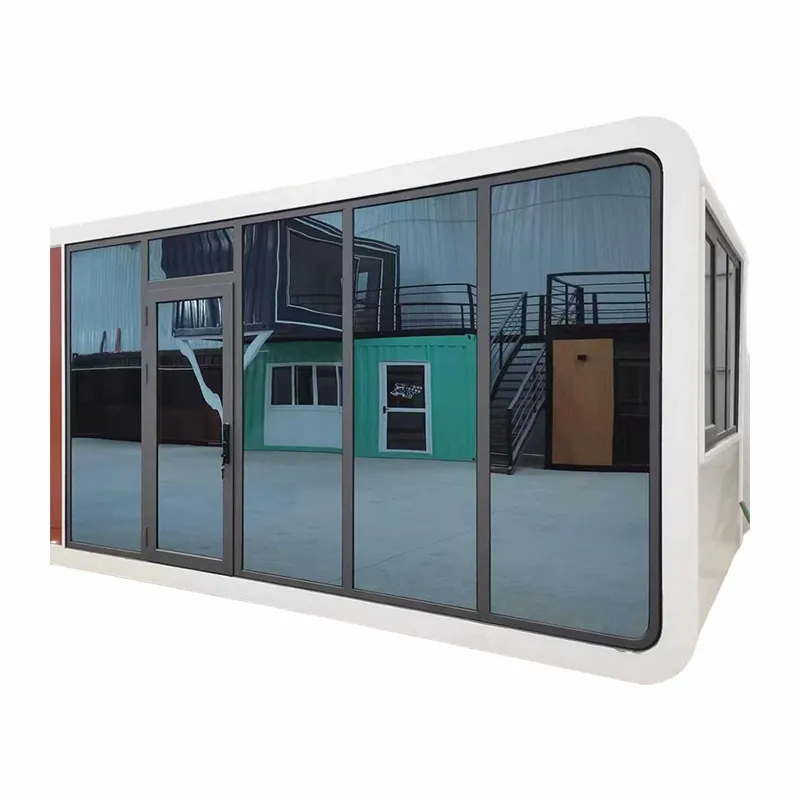
Container homes, as an emerging modular building form, have gained widespread global adoption in recent years due to their advantages such as rapid construction, manageable costs, and environmentally friendly recyclability. However, their structural safety, durability, and functional adaptability depend largely on the scientific selection of materials. This article systematically analyzes the key factors and practical strategies for material selection for container homes from three perspectives: the main structure, the enclosure system, and functional materials.
Main Structural Materials: The Core Guarantee of Strength and Durability
The main structure of a container home typically utilizes a standard container steel body or a customized steel frame. The material choice directly impacts the building's earthquake resistance, wind load resistance, and service life.
1. Standard Container Steel
Internationally used standard containers are often made of high-strength weathering steel (such as COR-TEN steel). This steel forms a protective layer through surface oxidation, effectively resisting corrosion and requiring no additional coating to withstand outdoor environments. Its yield strength typically exceeds 345 MPa, making it capable of withstanding the mechanical stresses and long-term loads experienced during transportation. However, it should be noted that for non-transportable, fixed-use housing, the interior must be treated with fireproofing, soundproofing, and thermal insulation, such as by filling with rock wool or polyurethane foam.
2. Customized Steel Structural Frame
For container homes with non-standard dimensions or special designs, Q345B low-alloy, high-strength steel is often used as the main frame material. This material combines excellent weldability and low-temperature toughness, allowing for modular assembly via bolting or welding. In coastal or high-humidity areas, it is recommended that the steel surface be hot-dip galvanized (zinc layer thickness ≥ 80μm) or coated with a dual protective system of epoxy zinc-rich primer and acrylic topcoat to extend the structural lifespan to over 30 years.
Enclosure System Materials: Balancing Functionality and Comfort
The enclosure system includes wall, roof, and floor materials. Their selection must take into account thermal insulation, waterproofing, and a healthy indoor environment. 1. Wall Materials
•Metal composite panels, such as aluminum honeycomb sandwich panels (typically 40-60mm thick), combine lightweight (density ≤ 4kg/m²) with high thermal resistance (K value up to 0.3W/(m²·K)), making them suitable for weight-sensitive mobile homes.
•Fiber cement board: Based on a calcium silicate substrate and coated with an abrasion-resistant coating, it offers excellent fire resistance (Class A non-combustible) and impact resistance. It is often used in combination with a polyurethane insulation layer.
2. Roof Materials
TPO single-ply roofing membrane (1.2-1.5mm thick) is recommended for flat-roof container homes. It offers superior UV resistance compared to traditional asphalt materials, and hot-air welding at the joints ensures zero leakage. For sloping roof designs, color-coated steel sheets (aluminum-zinc base + PVDF coating) can be used. Drainage efficiency can be optimized by adjusting the panel shape (such as angled or standing seam).
3.Flooring System
The base layer is typically non-slip patterned steel plate (3-5mm thick), topped with SPC flooring (4-6mm thick) or bamboo fiber composite material. The latter is not only environmentally friendly (formaldehyde emissions ≤ 0.1mg/L) but also has an AC4 wear resistance rating, making it suitable for both home and commercial settings.
Functional Materials: Precise Matching to Specific Needs
Depending on the container home's intended use, additional functional materials should be selected specifically:
•Soundproofing and Noise Reduction: Filling the wall interlayer with gradient density glass wool (24kg/m³), combined with double-layer staggered gypsum board installation, can reduce indoor noise to below 45dB.
•Photovoltaic Integration: Aluminum alloy rail interfaces are reserved on the roof to accommodate monocrystalline silicon photovoltaic panels (conversion efficiency ≥ 21%), achieving energy self-sufficiency.
•Intelligent Interface: Pre-embedded galvanized steel pipe bridges provide concealed wiring space for sensors and network lines.
Conclusion
Material selection for container homes is a multi-objective optimization process that requires comprehensive consideration of structural safety, environmental adaptability, cost control, and user needs. In the future, with the development of bio-based composite materials (such as bamboo steel) and intelligent building materials (such as self-healing concrete), the material system for container homes will further evolve towards greener and higher-performance options. Practitioners should develop scientific and rational material selection strategies based on specific project conditions, through material performance testing and simulation calculations, to promote the sustainable development of modular construction.